




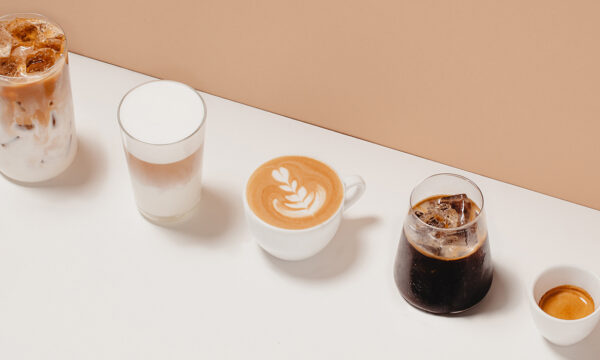
Espresso, flat white, latte macchiato… Do you have trouble understanding the different types of coffee? We’ll explain it all! Recipes…



Written by Alice
Reading time 11 minThere is no single “best” coffee — but there is a best coffee for you, and understanding why requires knowing how variety, roast level, origin, and processing interact to shape what ends up in your cup. Developed by coffee specialists at MaxiCoffee, this guide draws on the same criteria used by Q-graders and specialty roasters to help you navigate every choice confidently: from Arabica vs. Robusta to brewing method, grind size, and origin flavour profiles.
Coffee originated in the highlands of Ethiopia, where Coffea arabica grows wild. Arab scholars were among the first to document its stimulating properties, and by the 15th century it was being cultivated and traded in Yemen. From there, it spread to the Ottoman Empire, Europe, and eventually to every major tropical producing region we know today — Brazil, Colombia, Ethiopia, Vietnam, and Indonesia among them. This global dispersal explains why one species, Coffea arabica, now accounts for approximately 60% of all coffee produced worldwide. Understanding this journey is an essential first step in any coffee guide, helping you better appreciate the origins and diversity of the coffee you drink.
Coffee production is dominated by two main species: Arabica and Robusta. Arabica (Coffea arabica), endemic to the highlands of Ethiopia and now grown across Africa and South America, accounts for approximately 60% of global coffee production. It is prized for its delicate, smooth flavour notes, lower caffeine content (around 1.5% caffeine by dry weight), and higher sugar content (6–9%), making it the standard for specialty espresso and filter methods. It is typically cultivated at altitudes between 1,200 and 2,000 metres above sea level, where slower growth concentrates flavour complexity.
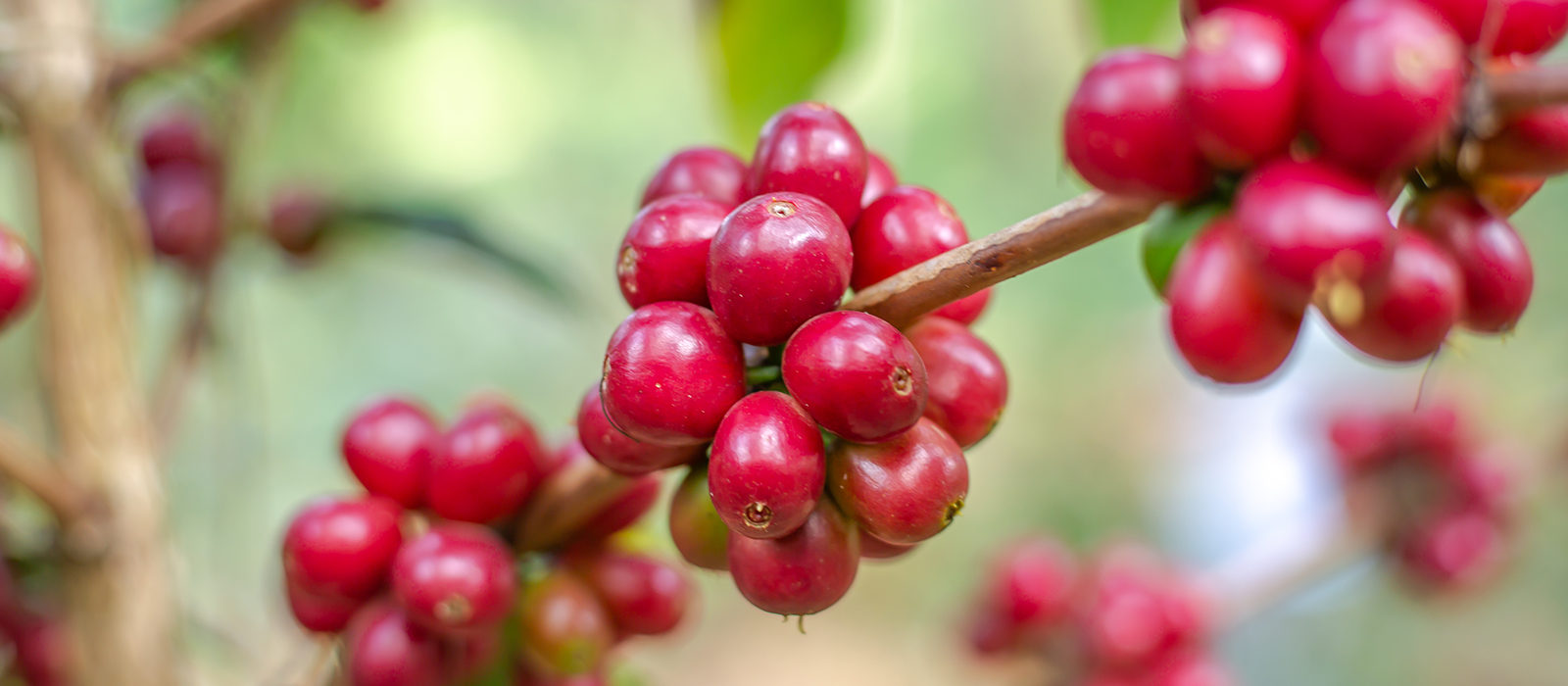
Robusta (Coffea canephora), primarily cultivated in Africa, Vietnam, and India, makes up most of the remaining ~40% of production. It contains nearly double the caffeine of Arabica (around 2.7%) and significantly less sugar (3–7%), resulting in a bolder, more bitter, earthier profile with a richer crema — which is why it remains the preferred base for traditional Italian-style espressos and blends. Other niche varieties like Liberica and the highly prized Gesha (Geisha), which has sold at auction for over $1,000 per pound, exist but remain rare.
Roasting transforms raw green beans into an aromatic profile. Darker roasts increase bitterness and notes of caramel or smoke while reducing acidity. Conversely, lighter roasts preserve floral and fruity acidity, highlighting the terroir. There are five roast levels ranging from very light to very dark; generally, lighter roasts suit filter coffee, while darker roasts are ideal for espresso.
Before a coffee reaches the roaster, the cherry surrounding the bean must be removed. The method used has a direct and significant impact on the flavour in your cup — often as much as origin or roast level.
The fruit pulp is removed before the beans are dried. This produces a clean, bright, well-defined cup with high acidity and clear expression of origin character. Ethiopian Yirgacheffe and Kenyan coffees are most often washed — expect floral, lemony, tea-like notes with precise clarity.
The whole cherry is dried in the sun before the fruit is removed. The bean absorbs sugars and fruit compounds during drying, producing a fuller-bodied, fruitier, sweeter cup with lower acidity. Ethiopian naturals and Brazilian coffees are common examples — expect blueberry, fermented fruit, and wine-like complexity.
A middle ground: some fruit mucilage is left on the bean during drying. The result is balanced sweetness and body, with more complexity than a washed coffee and more clarity than a natural. Common in Costa Rica and Guatemala.
| Process | Flavour character | Common origins |
|---|---|---|
| Washed | Clean, bright, floral, high acidity | Ethiopia, Kenya, Colombia |
| Natural | Fruity, sweet, full-bodied, wine-like | Ethiopia, Brazil, Yemen |
| Honey | Balanced, sweet, medium complexity | Costa Rica, Guatemala, El Salvador |
A coffee’s character is defined by its terroir—the soil, climate, and altitude of its origin. Arabica thrives up to 2,000 metres, producing different profiles based on geography: Colombian beans are often fruity, Kenyan varieties are aromatic, and Ethiopian coffees range from delicate to full-bodied. For detailed origin profiles, see our coffee bean guide.
Preparation styles vary widely. Espresso is a concentrated shot that can be served as a double espresso or a ristretto. While Arabica is common, many prefer Robusta for its intense body. Milk-based drinks like the cappuccino, latte macchiato, flat white, and mocaccino often use Robusta to balance the milk’s sweetness. Arabica excels in water-based drinks like the Americano, or indulgent treats like Viennese coffee and affogato.
The “best” coffee is subjective and depends on your palate and equipment. If you value intensity, choose a Robusta-based espresso. For something smoother, opt for a milk-based cappuccino or an aromatic Arabica filter coffee. The ideal choice is the one that matches your personal ritual and machine.
To build your tasting vocabulary, professional cuppers use the SCA Coffee Flavour Wheel — developed by the Specialty Coffee Association in collaboration with World Coffee Research — which organises 95 distinct flavour notes into three hierarchical levels, from broad categories (Fruity, Floral, Nutty/Cocoa) down to specific descriptors (Blueberry, Jasmine, Dark Chocolate). Using this framework when tasting a new coffee makes it easier to identify what you enjoy and replicate that experience with future purchases. Start from the centre of the wheel and work outward: identify the broad category first, then narrow down to the specific note.
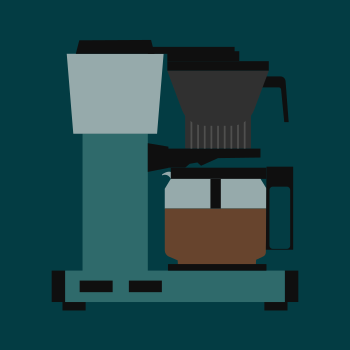
Ideal for brewing lighter, longer coffees, filter machines produce large quantities in one go — making them perfect for families, big breakfast drinkers or entertaining guests. They work best with ground Arabica. That said, we’d strongly recommend pairing one with a coffee grinder so you can grind whole beans fresh each time: your coffee will be noticeably more aromatic and vibrant.
One of the biggest innovations of the past decade, capsule machines have surged in popularity thanks to their technology and ease of use. At their core they produce espressos quickly and consistently, though many now offer a wider range of drinks — double espressos, cappuccinos, teas and hot chocolates. Each brand uses its own proprietary capsule format, but the choice within each system is usually broad enough to suit most tastes.
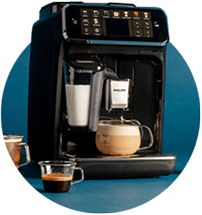
More and more coffee lovers are switching to bean-to-cup machines — and it’s easy to see why. They grind fresh on demand, giving you a noticeably better cup, and they work out cheaper per cup than capsules or pods over time. Crucially, you’re free to choose any coffee you like, regardless of brand — any variety, any roast level, anything that takes your fancy.
How to choose your coffee: five key criteria
Botanical variety
Arabica or Robusta? Arabica is mild, lower in caffeine, with floral and fruity notes. Robusta is bolder, more bitter and higher in caffeine. Many commercial coffees are blends of both. As a rule, a 100% Arabica will be more delicate, while a blend with Robusta will deliver more body and a richer crema in the cup.
Roast level
One of the most decisive factors. A light roast preserves acidity and the fruity or floral notes of the terroir. A dark roast develops cocoa, caramel or woody notes with less acidity. Look for indications on the packaging such as “light roast”, “medium” or “dark”, or a numbered intensity scale.
Origin and terroir
Just like wine, where a coffee comes from has a direct impact on how it tastes. Ethiopian Arabica tends to be floral and fruity; Brazilian is smooth and chocolatey; Colombian is well-rounded with a gentle acidity. Favour coffees that clearly state their country or region of origin over anonymous blends.
Freshness
Good coffee is fresh coffee. Where possible, check the roast date (not the best-before date): ideally, whole bean coffee should be consumed within a few weeks of roasting to make the most of its aromas.
Format — matched to your machine
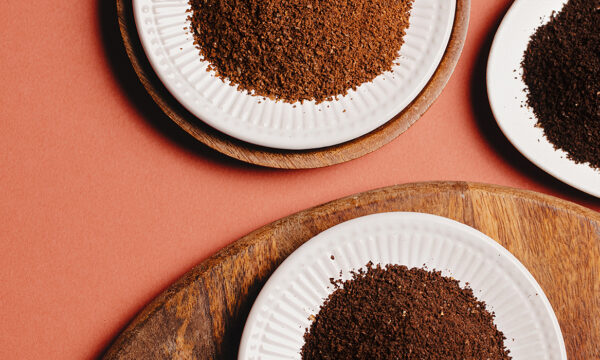
Whole bean, ground, capsules or pods? Each format suits a different type of machine. Whole bean offers the best freshness, provided you have a grinder. Ground coffee is convenient but oxidises more quickly. Capsules and pods offer ease and consistency, but with less flexibility on choice. Our coffee grind size guide covers the right setting for each machine, and our full coffee machine guide breaks down every format in depth.
Want a coffee shop experience at home? These Tassimo T-Discs combine an espresso with a hazelnut-caramel cream and a light milk foam for a 280ml drink that’s seriously comforting — perfect for a mid-morning treat.

Tassimo pods Coffee Shop Toffee Nut Latte x 8 T-Discs
• Flavoured Coffee
• Hazelnut and Caramel
• Size: Long Coffee
• 8 T-discs
Rich, deep espresso married to an incredibly creamy, silky milk foam — the Cappuccino Intenso is built for cappuccino lovers who won’t compromise on intensity. Ready in seconds, it delivers a genuine café-quality result at home.

Tassimo Pods Coffee Shop Selections Cappuccino Intenso x 8
• Cappuccino
• Flavour: Rich and Flavourful
• Volume: 190ml
• Number of Cups: 8 Drinks
A blend of Central American highlands and Ethiopian Arabica from Swiss house La Semeuse, founded in 1900. These ESE pods deliver a balanced, fruity and indulgent cup with hints of almond. Each sachet features a one-way valve for optimal freshness.

La Semeuse Mocca ESE pods x 40
• 40 x ESE pods
• Balanced and fruity espresso
• 100% Arabica blend
The organic and fair trade coffee: Monte Verde Bio & Fair Trade (Green Lion Coffee)
A 100% Arabica blend from organic agriculture with Fair Trade certification, roasted in Italy. Green Lion Coffee’s Monte Verde releases smooth notes of cocoa in the cup, with a full texture and a long, gentle finish. Compatible with Nespresso® Original machines — a committed choice for conscientious coffee lovers.

Green Lion Coffee Organic Coffee Beans Monte Verde – 250g
• Pure Origin
• Mexico
• Roasted in France
• Fair Trade Certified
A true icon from Lavazza, a house with 130 years of history. This 100% Latin American Arabica is roasted in Italy at an intensity of 8/13. In the cup it’s wonderfully elegant, with delicate notes of stone fruit and wild flowers. Available in capsules compatible with Nespresso® Original.

10 Nespresso* Original Compatible Capsules Espresso Qualita Oro – LAVAZZA
• Medium Roast
• Tasting Notes: Yellow Fruits / Wild Flowers.
• Aluminium Capsules
• 100% Arabica
Winner of the Meilleur Produit Bio 2026 award (17.52/20 from Biotopia), this 100% Arabica blend from Peru and Ethiopia is roasted in France on the Bassin d’Arcachon. In the cup it’s delicate and indulgent, with notes of toasted bread, caramel and candied orange, and a beautiful woody finish.

Green Lion Coffee Ground Coffee L’Original – 1kg
• 100% Arabica Blend
• Peru / Ethiopia
• Winner of the Best Organic Product 2026 award
• 1kg Organic Ground Coffee
One of Perléo’s best-sellers in ground format. A blend of 30% Arabica and 70% Robusta, dark-roasted in the Italian style in France (Bassin d’Arcachon), Forte delivers a characterful, expressive espresso with a robust body and indulgent finish notes of walnut, molasses and cocoa. Ideal in a moka pot or filter machine.

Ground Coffee Perléo Espresso Forte – 250g
• Blend Arabica/Robusta
• Roasted in France
• Intense Espresso
• Italian-style Coffee
Winner of the Meilleur Produit Bio 2026 award (17.61/20), the Oasis Blend from Cafés Lugat is an assembly of organic Arabicas from Brazil, Guatemala, El Salvador and Peru, roasted medium+ in France. It opens with a soft, velvety attack of cocoa, moves through a silky body with hazelnut accents, and finishes with warming hints of gingerbread and brown sugar. Excellent as both espresso and filter.

Cafés Lugat Organic Coffee Beans – Oasis Blend – 250g
• 100% Arabica Blend
• Brazil / Guatemala / Peru / El Salvador
• Winner of the Best Organic Product 2026 Award
• For Espresso and Filter Coffee
From 1895 Coffee Designers, Lavazza’s speciality coffee arm, this is a blend of Arabicas and Robustas from Brazil (50%), Colombia (20%) and India (30%), dark-roasted to reveal a powerful coffee with dominant chocolate notes, hints of spiced cinnamon and orange marmalade. Best as an espresso or in a moka pot.

1895 by Lavazza Specialty Coffee Beans Cocoa Reloaded – 250g
• Specialty Blend
• Brazil 50% / India 30% / Colombia 20%
• Ideal for Espresso and Moka Pot
• Roasted in Italy
There’s no single definitive “top 10,” since the best coffee always depends on personal taste. That said, these styles consistently top the rankings: espresso, ristretto, cappuccino, latte macchiato, flat white, Americano, mocaccino, espresso macchiato, Irish coffee and affogato. Each highlights a different side of the bean, so the real answer is whatever suits your mood and your machine — check out our coffee makers guide for help choosing the right equipment.
In the speciality coffee world, the “3 C’s” typically refer to Crop, Cup and Coffee — shorthand for the full journey from how and where the coffee is grown, to how it tastes in the cup, to the finished drink in your hand. It’s a reminder that great coffee depends on every stage of the chain, not just the roast or brewing method.
Start by choosing a variety and roast level that matches the drink you want to make, then grind your beans just before brewing — coarser for filter, finer for espresso. Use around 1g of coffee per 15–18ml of water and brew with water just off the boil (around 90–96°C). Taste as you go and adjust the grind size, ratio or brew time until you land on your ideal cup. Our coffee making guide walks through the full process. For brewing techniques and recipes, our barista tips guide walks you through each style in detail.
Whole bean, ground, capsule or pod — you now have everything you need to make a confident choice. But remember: coffee is ultimately a matter of personal taste, and only you can decide which one suits you best.
Discover all of our articles
Our website has had a complete makeover, with a new design and improved features to make your-day-to-day browsing experience easier and more enjoyable.
To continue enjoying the MaxiCoffee experience, you’ll just need to reset your password.