


Bean-to-cup machine, cafetière, Moka pot… whichever way you make your coffee, grinding your own beans is second nature for any…



Written by Chloé
Reading time 10 minGreat filter coffee starts with a great grind. The right grinder for filter coffee turns coffee beans into a consistent medium grind, in the 250-300 micron range, so water extracts evenly across different brewing methods instead of leaving you with sour or bitter cups. This guide compares manual, electric and budget grinders for UK homes, covering hopper capacity, dimensions and grind range, and points to the models worth considering at every price point.
When looking for the best grinder for filter coffee, consistency and freshness are two of the most important factors to consider. Once coffee beans are ground, they lose aroma within minutes as oils oxidise, while whole beans stay fresh for weeks. Grinding just before brewing is the single easiest upgrade you can make. Just as important is consistency: uneven particles mean fines over-extract and turn bitter while coarse bits under-extract and taste sour, in the same cup. That’s why cheap blade grinders disappoint, they chop rather than grind, producing wildly inconsistent particle sizes.
Filter brewing relies on gravity rather than pressure, so a grinder for filter coffee needs to slow water down just enough to extract properly without pooling or rushing through the bed. A grinder with clearly marked settings for each brew method makes it easier to return to a known reference point.
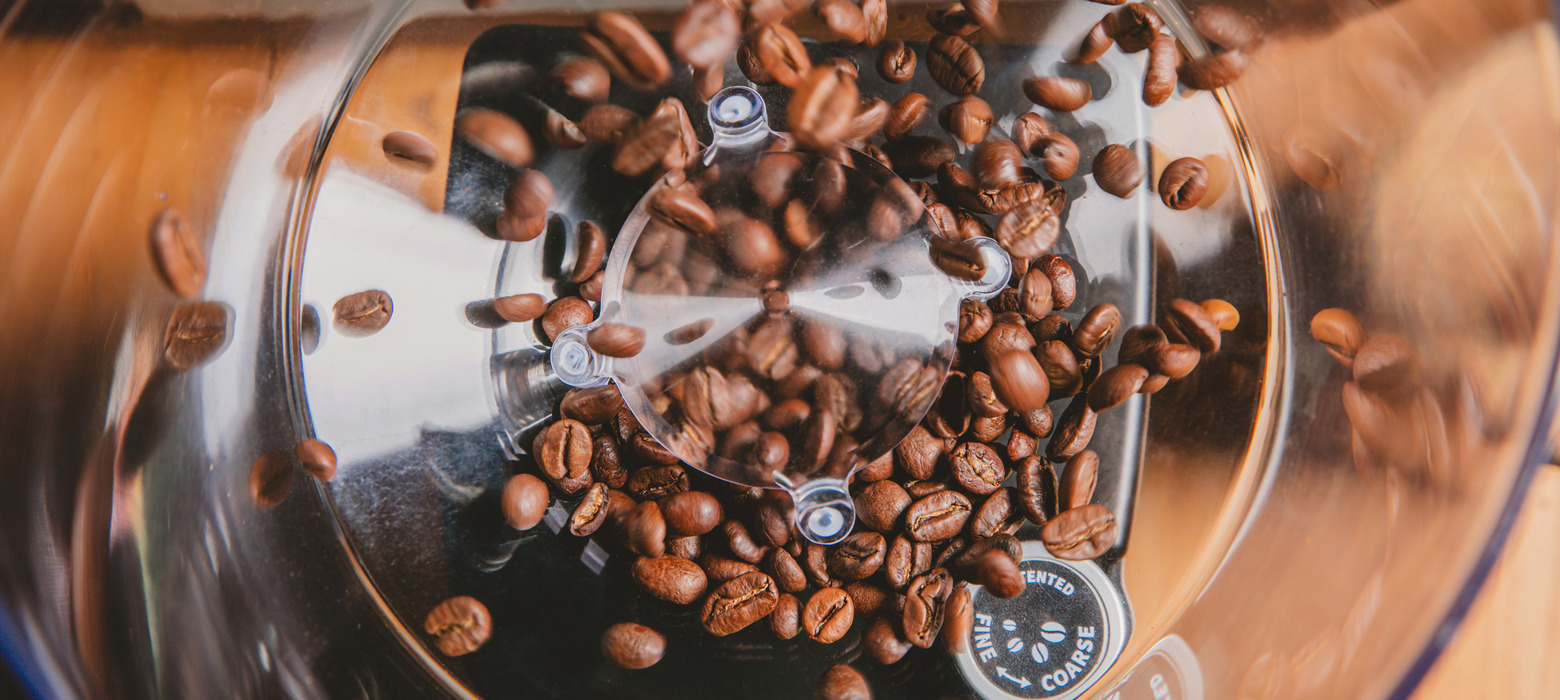
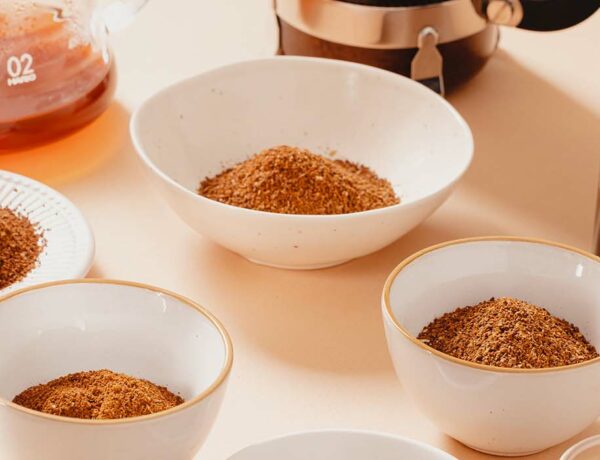
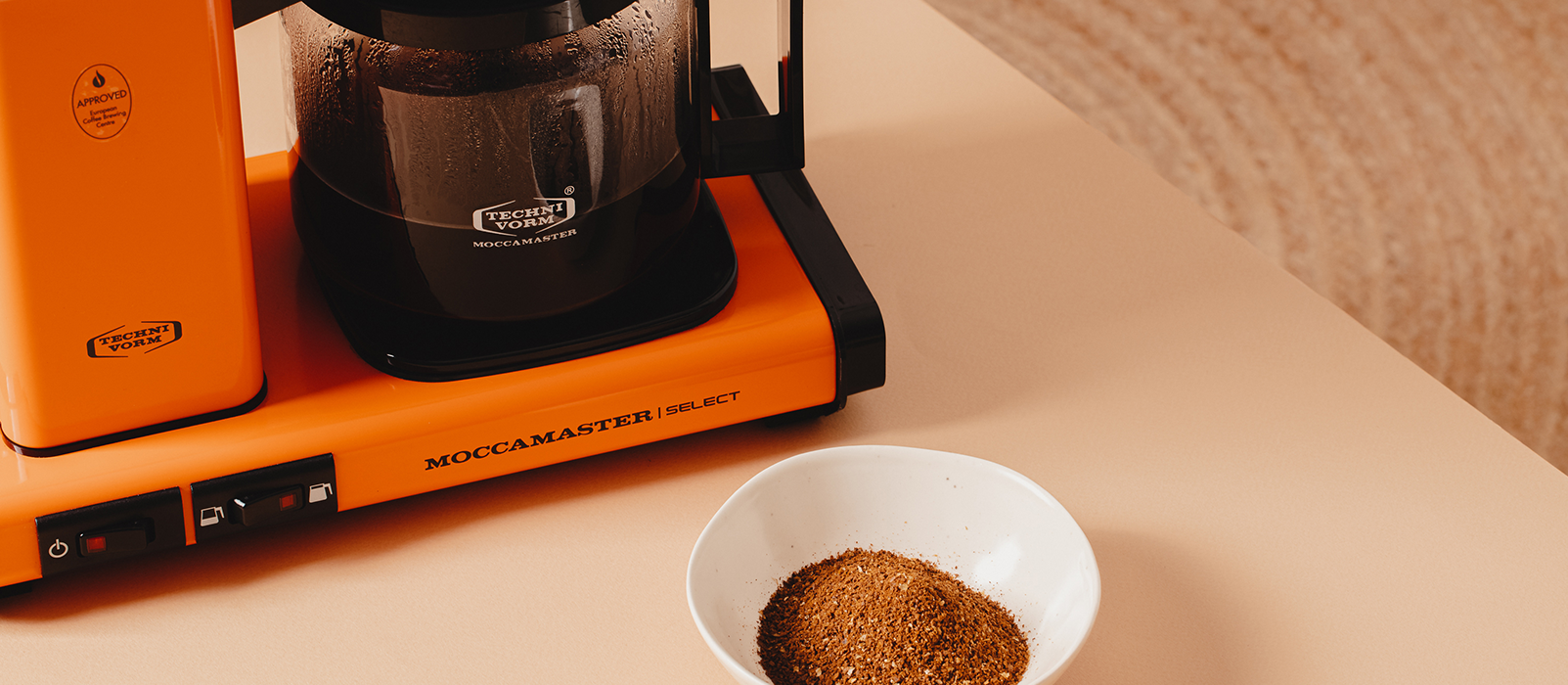
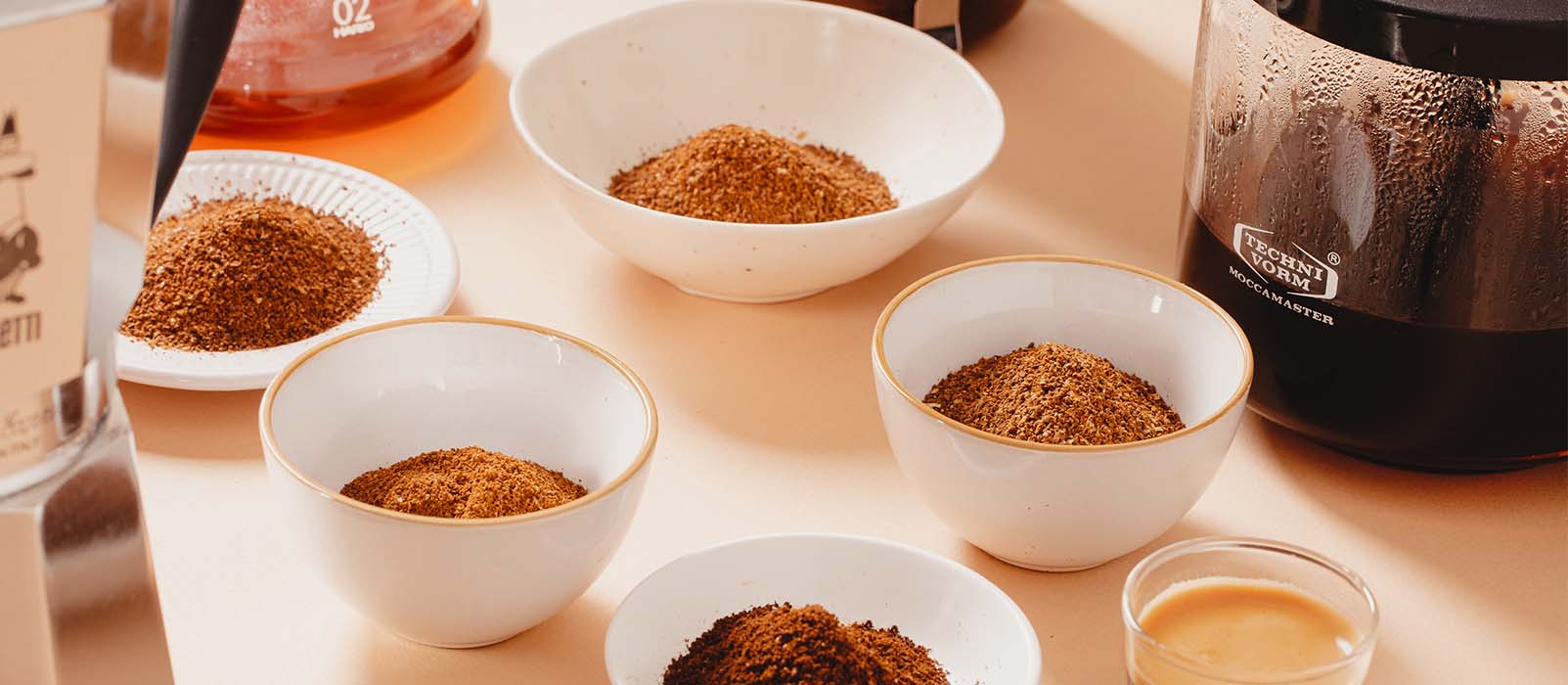
For most drip and automatic filter machines, aim for a medium grind, like granulated sugar, around 250-300 microns. Too fine and water lingers, pulling out bitterness and papery aftertastes. Too coarse and water rushes through, leaving a thin, sour cup. A burr grinder keeps particles uniform; a blade grinder mixes fine dust with larger chunks and muddies the result regardless of brew ratio.
French press needs a coarse grind for full immersion. Pour-over and V60 sit close to standard filter, often slightly finer. Aeropress is flexible: medium-fine for short brews, coarser for longer steeps. Batch brew stays close to standard filter, sometimes marginally coarser.
| Brew method | Typical grind description |
|---|---|
| Aeropress | Medium-fine, adjustable by steep time |
| Pour over / V60 | Medium, slightly finer than standard filter |
| Drip / Filter machine | Medium, around 250-300 microns |
| Batch brew | Medium, occasionally slightly coarser |
| French press | Coarse, similar to breadcrumbs |
Not all grinders make great filter coffee equally well. You’re choosing between three categories, each suited to different brewing methods, with trade-offs in cost, convenience and grind quality.
Spinning blades chop beans into whatever size they happen to land on, giving a mix of coarse chunks and fine dust. For filter coffee, that inconsistency is a dealbreaker: fines over-extract and turn bitter while coarse bits under-extract and taste weak. Fine for spices, not for filter or espresso.
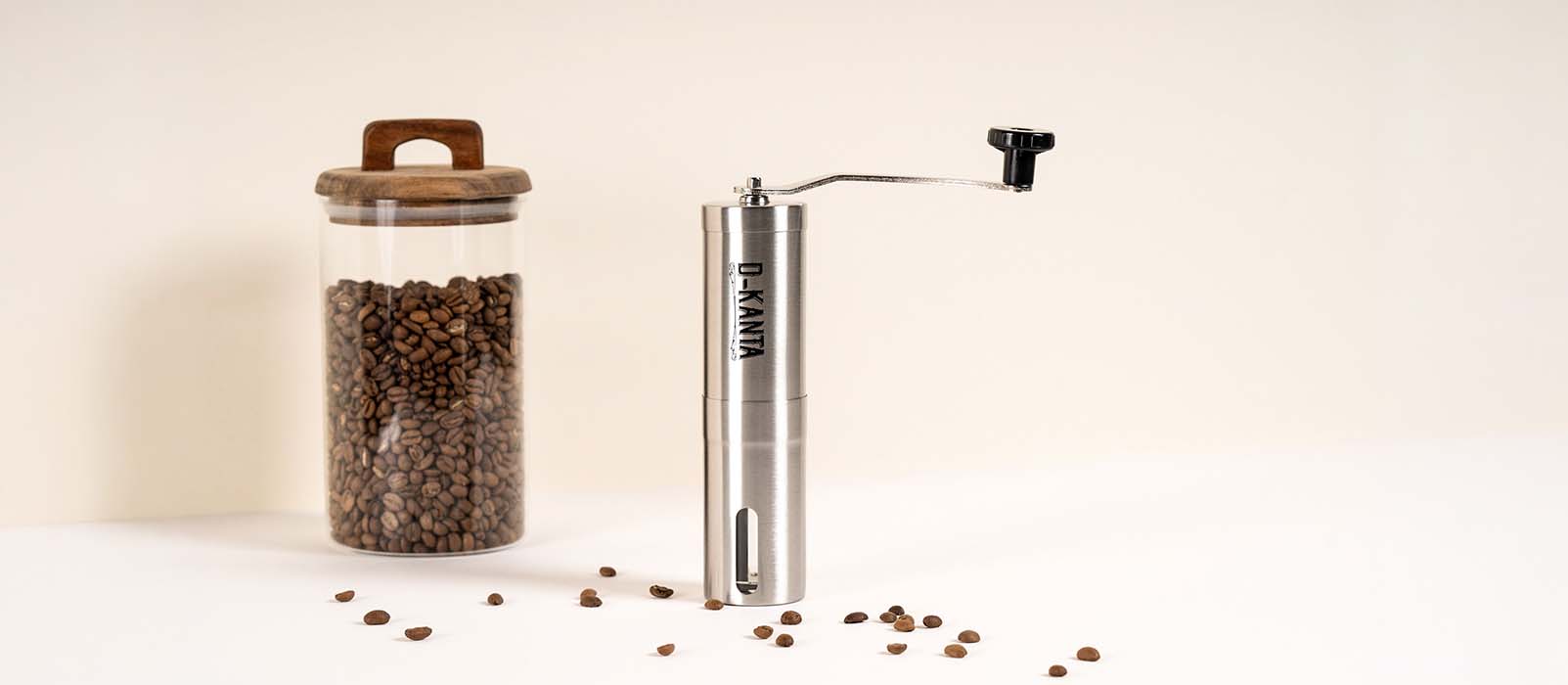
Hand-cranked burrs are compact, need no power outlet, and travel well. Options like the Eurika Baby or Comandante C40 MK4 sit at the higher end, while the D-Kanta MG07 or Hario Mini Mill Slim Plus, a popular entry-level choice for many people’s first grinder, prove you don’t need to spend a fortune for an even, cafe-quality grind.
Electric burr grinders trade arm effort for speed and repeatability, with a motor that removes human variability from the equation. Models like the Tiamo Fat Coffee Grinder offer a wide grind range, moving between coarse French press grounds and fine espresso grinds across different brewing methods without swapping equipment.
Fresh Beans Still Matter
No grinder rescues stale or poorly roasted coffee beans. Origin, roast date and roast style shape flavour; the grinder unlocks what’s already in the bag, brew after brew, rather than leaving results to chance.

Burr geometry has more influence on cup quality than almost any other spec. Two shapes dominate the market, and each produces a distinct grind profile.
A conical burr uses a cone-shaped inner burr rotating inside a ring-shaped outer burr, running at lower speed with less heat and noise. Conical burrs dominate hand grinders and entry to mid-range electric models, trading a slightly wider particle distribution for good flavour clarity and a forgiving margin for grind-size mistakes.
Flat burrs use two ring-shaped burrs with cutting teeth, demanding more torque. A common reference point is the 64 mm flat burr. Their Particle Distribution is narrower than a conical burr’s, giving cleaner extraction and sharper clarity, at a higher price point.
Ceramic burrs run cooler, resist rust, and suit hand grinders, but are brittle against drops or stray stones. Stainless steel burrs hold up better to mechanical stress and stay sharp longer, which is why they show up in flat burr electric grinders built for higher volume.
Manual grinders remain a preferred choice for filter coffee, letting you dial in a consistent, even grind without the noise or bulk of an electric burr set.
The Comandante C40 MK4 is the grinder serious filter coffee drinkers reach for. Its high-end burr set produces remarkably even particle sizes with minimal fines, low static, and a premium American cherry wood body that gives it a genuine premium feel and solid build quality, especially noticeable with dark roasts where subtle flavours can get muddied by inconsistent grinding. Check the dimensions against your counter or travel bag before buying, since the glass catch cup adds a little height.

Comandante C40 MK4 Nitro Blade Grinder – American Cherry
• Free 250g Coffee and Grinder Cleaner included!
• Free Delivery
• Flawless Precision
• Simple adjustments
The D-Kanta MG07 offers dependable, adjustable performance without premium prices. Its stepped adjustment collar and ergonomic handle make switching between pour-over and immersion brewing easy. Its dimensions stay compact enough for a kitchen drawer, and the hopper holds enough beans for a single serving.

D-Kanta Manual Coffee Grinder MG07 + Free Coffee
• Free 250g Coffee Beans and Cleaner
• For All Brewing Methods
• Conical Stainless Steel Burrs
• Diameter of Burrs: 38mm
| Grinder | Grinder range | Price bracket |
|---|---|---|
| D-Kanta MG07 | Fine to medium-coarse | Mid-range |
| Comandante C40 MK4 | Fine to coarse, highly consistent | Premium |
A tight budget doesn’t have to mean a poor grind, provided you match the grinder to your brew method rather than chasing every feature at once.
The Hario Mini Mill Slim Plus is one of the most popular entry-level picks for a first grinder. Its ceramic burrs handle everyday filter grinds without a metallic taste, the plastic body keeps the weight down for travel, and the small hopper suits single servings rather than batch grinding. Check the dimensions before buying if counter space is tight.
| Budget tier | Typical grinder type | Best for |
|---|---|---|
| Entry-level | Ceramic or steel conical, entry electric | First grinder, occasional brewing |
| Mid-range | Premium manual, entry electric flat or conical | Daily filter drinkers wanting consistency |
| Premium | Single-dose flat or conical, stepless | Cafe-level clarity at home |
| Commercial-grade | Grind-by-weight, semi-commercial | Multiple people brewing daily |
A grinder under £100 gets you far more consistency than pre-ground coffee, and for filter or French press the difference is immediately noticeable. Where cheaper options show their limits is espresso, which demands a finer, more precise grind range than most can reliably produce. It isn’t a big deal if you only brew filter coffee, since grind sizes for drip and pour-over are far more forgiving than espresso’s narrow window. These remain among our top recommendations for anyone building a first grinder setup on a budget.
Filter coffee needs a coarser, forgiving grind, while espresso demands a fine, ultra-consistent grind that withstands nine bars of pressure without channelling. A true dual-purpose grinder needs a wide adjustment range and burrs precise enough for both.
Because water is forced through the puck under pressure, any inconsistency shows up instantly as sourness or bitterness. Flat burrs are often favoured for an espresso grinder for their narrower particle distribution at fine settings. On the manual side, the Comandante C40 MK4 is well regarded among home baristas who split time between pour-over and espresso, thanks to its nitro-blade burr set and tight consistency at fine settings.
A single dose grinder grinds exactly the beans you feed into it, with little retention, useful if you switch beans often. Hopper grinders hold a reserve ready to go, suiting households that drink the same coffee daily and value speed over flexibility.
Once you’re serving multiple people daily, whether an office kitchen pouring filter coffee for a team or a household going through several pots a day, the calculation changes. Commercial coffee grinders handle repeated, high-volume grinding without overheating, and their build quality reflects that daily workload.
Commercial models typically run on variable RPM motors, adjusting speed for the bean and batch size. Look for larger burr sets: bigger surface area means more beans processed per rotation and less heat buildup. Commercial units also carry a larger hopper to keep up with demand. Dimensions are often underestimated, so measure your available space before investing.
Dispenser grinders serve multiple people in quick succession without weighing out beans each time, a natural fit for small cafes or busy households. For most home filter drinkers brewing one or two cups a day, though, a large dispenser is genuinely overkill: match the grinder to your actual throughput, not your aspirations.
Our picks are chosen around four practical criteria: burr type and grind consistency, exchange retention, adjustability across brew methods, and value for money at each price point. These four criteria drive our top recommendations across every price tier for filter coffee. Where a grinder outside our range is mentioned, it’s for context on what the wider market recommends, not a substitute for the models available through MaxiCoffee.
A burr grinder with stepless adjustment is the best all-round pick. The Hario Mini Mill Slim Plus grinds consistently at the medium settings filter coffee needs, costs far less than most electric options, and still outperforms blade grinders on uniformity.
Yes. Burr grinders crush coffee beans between two surfaces for a consistent size, while blade grinders chop unevenly, causing uneven extraction and a muddled cup of filter coffee regardless of how good the beans are.
Only if the espresso grinder has enough range to move comfortably into coarser territory. Dedicated models like the Baratza Encore ESP or hopper-based all-rounders like the Baratza Smart Grinder Pro are built primarily for espresso, so check the coarse end of their range first. Dual-purpose grinders like the Comandante C40 MK4 handle both ends of the spectrum well.
Grind only as much coffee as you’ll brew that session, rather than prepping too much coffee in one go. A standard filter brew uses around 15 to 18 grams of coffee per 250 ml of water, and freshness drops noticeably within 20 to 30 minutes of grinding.
It’s one of the most frequently recommended electric picks for filter brewing, thanks to its 64 mm flat burrs and low retention, but it isn’t designed for espresso. The Comandante C40 MK4 offers comparable consistency while also handling espresso.
Think in tiers rather than chasing a single price point. An entry-level hand grinder is enough to notice a real jump over pre-ground coffee, and cheaper options are a sensible start if you’re not sure how much coffee you’ll actually grind each week; premium single-dose models are worth it mainly if you’re chasing cafe-level consistency at home.
Brush out the burr chamber every week or two, and give it a deeper clean monthly if you brew daily. Anti-static technology reduces clumping and ensures more even dosing into your filter basket.
Investing in a dedicated burr grinder is the most effective way to elevate your everyday brew, ensuring fresh coffee beans extract with consistent clarity and balanced flavour. If you prioritise mobility and precision on a modest budget, a reliable manual option like the Hario Mini Mill Slim Plus delivers outstanding results for single-cup brewing. For coffee enthusiasts seeking uncompromising particle uniformity and the versatility to switch effortlessly between filter and espresso, the Comandante C40 MK4 remains an exceptional long-term investment for the home barista.

Best Coffee Beans UK 2026: Top 10 Beans for Bean-to-Cup Machines
Our website has had a complete makeover, with a new design and improved features to make your-day-to-day browsing experience easier and more enjoyable.
To continue enjoying the MaxiCoffee experience, you’ll just need to reset your password.