

Arabica and Robusta are the two most widely cultivated coffee species in the world. Choosing between them depends on your…



Written by Chloé
Reading time 9 minThe difference between a burr grinder and a blade grinder comes down to consistency. A burr grinder crushes coffee beans between two adjustable surfaces and gives an even grind, while a blade grinder chops them at random. For most coffee lovers, a burr grinder is the better option because it makes cleaner, more balanced cups. A blade grinder remains a low-cost way to start grinding fresh.
This guide explains the burr grinder vs blade comparison, how each type works, how they compare on taste, heat and price, and which one suits your brewing method. You will also find three manual burr grinders from MaxiCoffee, each suited to a different use.
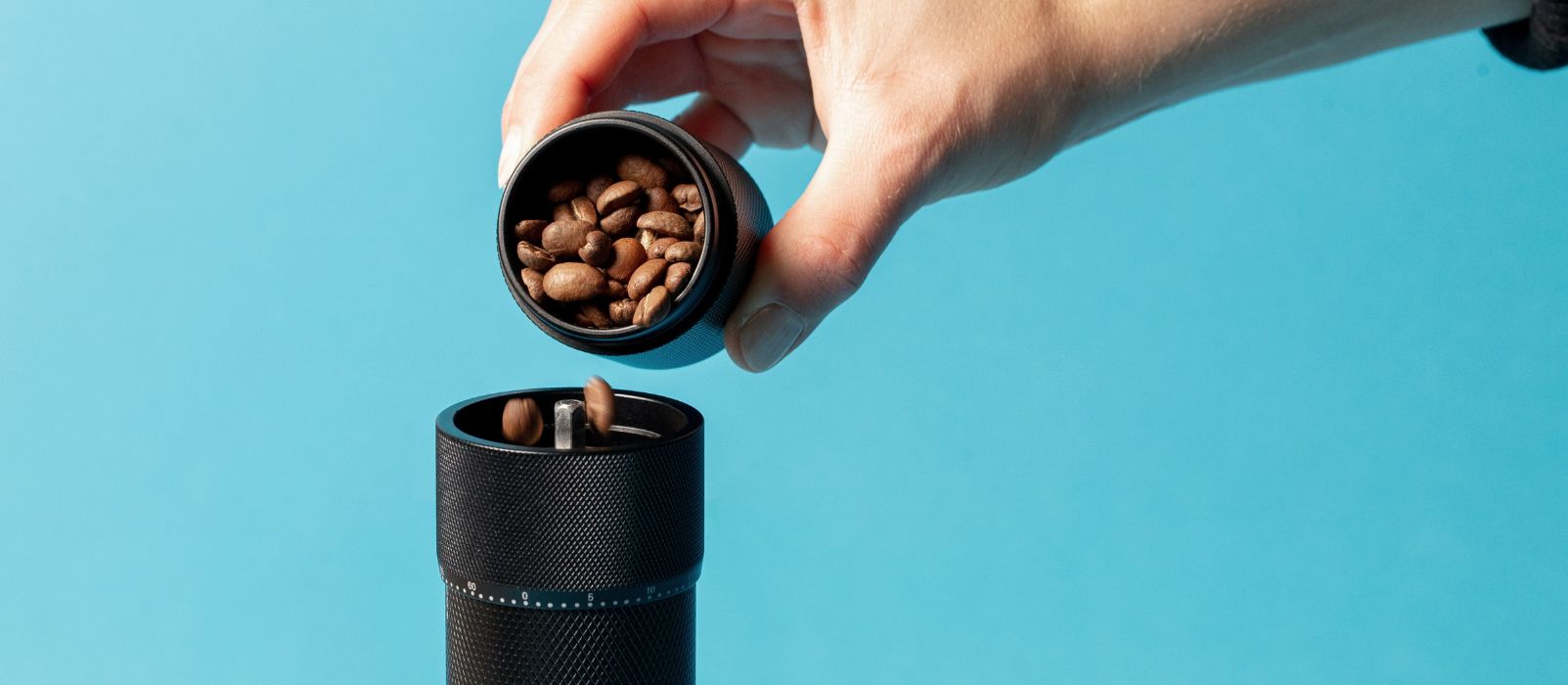
A burr coffee grinder uses two abrasive surfaces, called burrs, to crush coffee beans. One burr stays fixed while the other rotates. The gap between them sets the grind size, so the beans only leave the grinding chamber once they are small enough to pass through.
Because you adjust the distance between the burrs instead of the grinding time, burr grinders make it easy to repeat the same result every morning. They exist as electric or manual models, with two burr shapes: flat and conical.
A blade grinder works like a small blender. A metal blade spins at high speed and chops the beans into smaller pieces. You control the grind only by grinding for longer, which is hard to repeat from one day to the next.
The result is a mix of fine dust and large chunks. Fine particles over-extract and taste bitter, while big pieces under-extract and taste sour. This uneven extraction is why blade grinders often give muddy or flat cups. Blade grinders can also warm the beans as they bounce around the blade, which does not help flavour.
In most cases, yes. Burr grinders produce a more uniform particle size, offer precise grind sizes and generate less heat than blade grinders. That means more even extraction and a sweeter, cleaner cup, whatever your brewing method.
| Criteria | Burr grinder | Blade grinder |
|---|---|---|
| Grind consistency | Even particle size | Mix of dust and chunks |
| Grind sizes | Adjustable and repeatable | Depends on grinding time |
| Heat | Less heat transferred to the beans | Can warm the beans |
| Taste in the cup | Cleaner and more balanced | Harsher, muddier or flat |
| Price | Higher, though manual models are affordable | Usually cheaper |
| Best for | Espresso, filter and French press | Occasional use on a tight budget |
If you are on a very tight budget, a blade grinder still beats pre-ground coffee, especially with freshly roasted beans. But if flavour matters to you, burr grinders are the better option.
A flat burr grinder has two parallel rings with cutting teeth facing each other. Flat burrs tend to deliver a very consistent particle size and good flavour clarity, which filter coffee fans appreciate. They usually cost more than conical models and are harder to align, so a flat burr grinder is most often found in higher-end electric machines.
A conical burr grinder places a cone-shaped burr inside a ring burr. This design is generally less expensive and easier to calibrate, which is why most manual models use it. A good conical burr grinder is a big step up from any blade grinder and handles most home brewing very well.
Each brewing method asks for a different grind, so the right grinder depends on how you make your coffee. Burr grinders let you switch between grind sizes with a click, which a blade grinder cannot do reliably.

Espresso needs fine, very consistent particles and small adjustments. A blade grinder cannot deliver this, because dust and chunks lead to channelling and uneven extraction. Choose a burr grinder with fine adjustment, and check that it is designed to reach espresso fineness, as not every burr grinder is.

For V60, Chemex or AeroPress, a medium and even grind brings out sweetness and clarity. Burr grinders give you this regularity, while a blade grinder tends to make the cup taste flat or bitter.
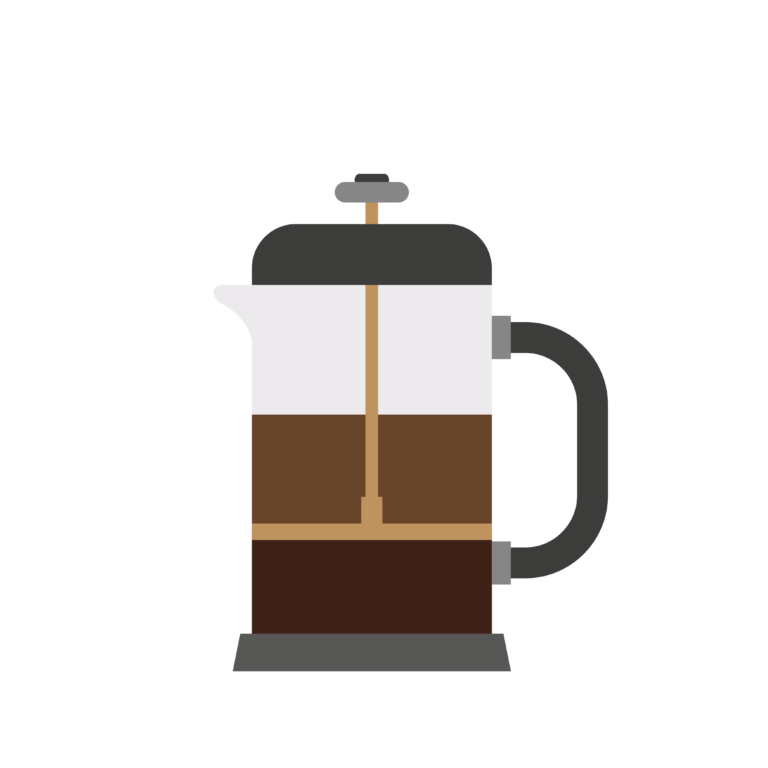
French press requires a coarse grind. Blade grinders struggle here, because the fine dust they produce passes into the cup and over-extracts. Burr grinders keep the particles coarse and even, for a cleaner result.
If you drink coffee every day and care about taste, it is worth getting a burr coffee grinder. You gain control over the grind, more consistent flavour from your coffee beans and less heat during grinding. Even an entry-level manual burr grinder improves on a blade model, and it often costs less than an electric one.
If you rarely brew at home or only use pre-ground coffee, the upgrade matters less. Start with your habits, then pick the grinder that fits.
Yes, but slowly. Burrs wear down with use, and grinders eventually need new ones. The lifespan depends on the model and the steel used, so check the manufacturer’s guidance. A hardened steel burr set, such as the high-nitrogen martensitic steel burrs in the Comandante C40 MK4 Nitro Blade below, is designed to hold its edge for a long time.
The main drawbacks of burr grinders are cost and effort. Electric burr grinders are more expensive than blade grinders, and manual models require some hand cranking. Burr grinders can also take more space and need occasional cleaning. Consistency, control and less heat remain clear advantages.
An electric burr grinder is fast and convenient for daily use, but it costs more and takes up counter space. A manual burr grinder is compact, quiet and portable, and usually more affordable for the same grind quality. If you want to compare more models, read our guide to the best manual coffee grinder.
Below are three manual burr grinders from MaxiCoffee, each linked to a specific need.
The Hario Mini Black Pro is a lightweight manual grinder with conical stainless steel burrs. It holds 20 g of coffee, enough for one to two cups, and suits filter methods such as V60, Chemex or AeroPress. Its removable handle and compact size make it easy to carry. It is a good choice for travel or a small kitchen.

Hario Mini Black Pro Grinder
The Hario Mini Black Pro manual grinder offers precise grinding thanks to its conical stainless steel burrs, ideal for filter methods such as V60 or Chemex. Compact, lightweight and robust, it is perfect for everyday use or on the go. Its removable handle, detachable design and durable materials make it a reliable choice for filter extraction methods.
See the productDespite its name, the Comandante C40 MK4 Nitro Blade is a burr grinder, not a blade grinder. Nitro Blade is the name of its conical burr set, made from high-nitrogen martensitic steel. Its click system locks your preferred setting, so you can repeat results for any brewing method. It is made in Germany and comes with a 10 year warranty. It suits enthusiasts who want maximum precision.

Moulin – C40 Mk4 Nitro Blade – Racing Green – Comandante
The Comandante C40 MK4 Nitro Blade Racing Green is a manual coffee grinder that strikes the perfect balance between precision, intelligence, quality and practicality. Its advanced burr set design and mechanism ensures a really consistent grind for all brewing methods! Supplied with 2 jars. Made in Germany.
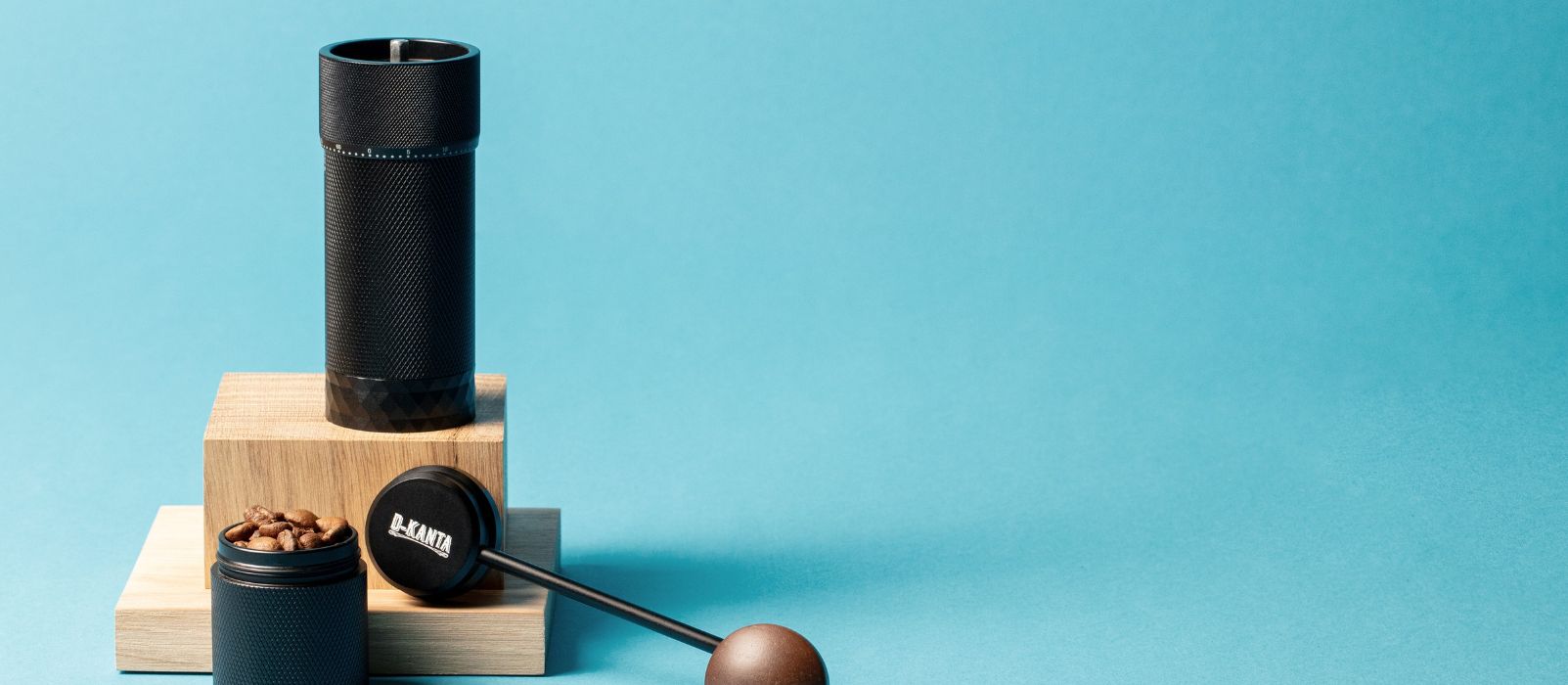
See the productThe D-Kanta MG07 has 38 mm conical stainless steel burrs and 120 clicks of adjustment. It grinds for pour-over, filter coffee and espresso with pressurised filter baskets. Its 25 g capacity is equivalent to about four cups. It is a flexible choice if you use several brewing methods.

D-kanta Manual Coffee Grinder Mg07
The D-Kanta MG07 manual coffee grinder has been specially designed to guarantee perfect cup results. With 120 settings, it produces the perfect grind for pour over coffee, filter coffee and espresso with pressurised filter baskets. Its capacity is 25g, equivalent to four cups. The MG07 grinder ensures that your coffee never comes into contact with plastic.
See the product| Grinder | Burr type | Best for |
|---|---|---|
| Hario Mini Black Pro | Conical, stainless steel | Filter methods, travel, small kitchens |
| Comandante C40 MK4 Nitro Blade | Conical, high-nitrogen martensitic steel | Enthusiasts wanting maximum precision |
| D-Kanta MG07 | 38 mm conical, stainless steel | Pour-over, filter and espresso with pressurised baskets |
Usually yes, especially with freshly roasted coffee beans, because grinding just before brewing keeps more aroma. For a good result, a burr grinder remains preferable. For a complete walkthrough, see our guide on how to grind coffee beans.
It is not recommended. Espresso requires a fine, uniform grind, and blade grinders produce uneven particles that lead to uneven extraction and unbalanced shots.
Use a coarse grind. A burr grinder gives you even coarse particles, which limits bitterness and sediment in the cup.
A blade grinder is usually cheaper, compact and simple to use. It is a reasonable starting point if you want to grind fresh on a tight budget, but it cannot match the consistency of a burr grinder.
In most cases, yes. A burr grinder produces a more uniform particle size, which leads to more even extraction and a cleaner, more balanced cup.
It depends on the model. Check that the grinder is designed to reach espresso fineness and offers fine adjustment. The D-Kanta MG07 can grind for espresso with pressurised filter baskets.
Flat burrs tend to offer more flavour clarity and are often found in higher-end electric machines. Conical burrs are generally less expensive and easier to calibrate, and most manual grinders use them.
Choosing between a burr grinder and a blade grinder comes down to how much you value grind consistency and cup quality. While a blade grinder offers an affordable entry point for fresh beans on a tight budget, it cannot match the precision of burrs. A burr grinder delivers the uniform grind size, reduced heat, and repeatable control needed for a balanced extraction across espresso, filter, or French press. If you want better flavour in your daily cup, investing in a burr grinder, even a compact manual model, is the most rewarding upgrade you can make.
Coffee storage, what is the best way to store coffee beans or ground coffee?
Best Italian Coffee Beans: Top 10 for Authentic Espresso for 2026